Choosing the right steel plate cutting method is not simply a question of which technology is the most advanced.
Laser, plasma and flame cutting each have distinct strengths. The best option depends on the steel grade, plate thickness, part geometry, required tolerance, edge quality, production volume, lead time and what needs to happen to the component after cutting.
A thin, intricate component requiring tight dimensional control may be well suited to laser cutting. A medium or thicker plate requiring an effective balance between speed, quality and cost may be better suited to high definition plasma cutting. For very thick carbon steel components, flame cutting can remain the most practical and economical choice.
Understanding these differences can help you avoid unnecessary processing costs, reduce secondary work and receive components that are better suited to their final application.
The short answer
- Choose laser cutting when precision, intricate detail, a narrow kerf and a clean finish are the priorities.
- Choose high definition plasma cutting when you need speed, versatility and good cut quality across a broad range of plate thicknesses.
- Choose flame cutting when working with thicker carbon or low alloy steel and economy is more important than achieving the finest tolerance or smallest heat affected zone.
These are guidelines rather than fixed rules. The capabilities of the cutting machine, the condition and grade of the plate, the complexity of the component and the required specification must all be considered.
What is laser cutting?
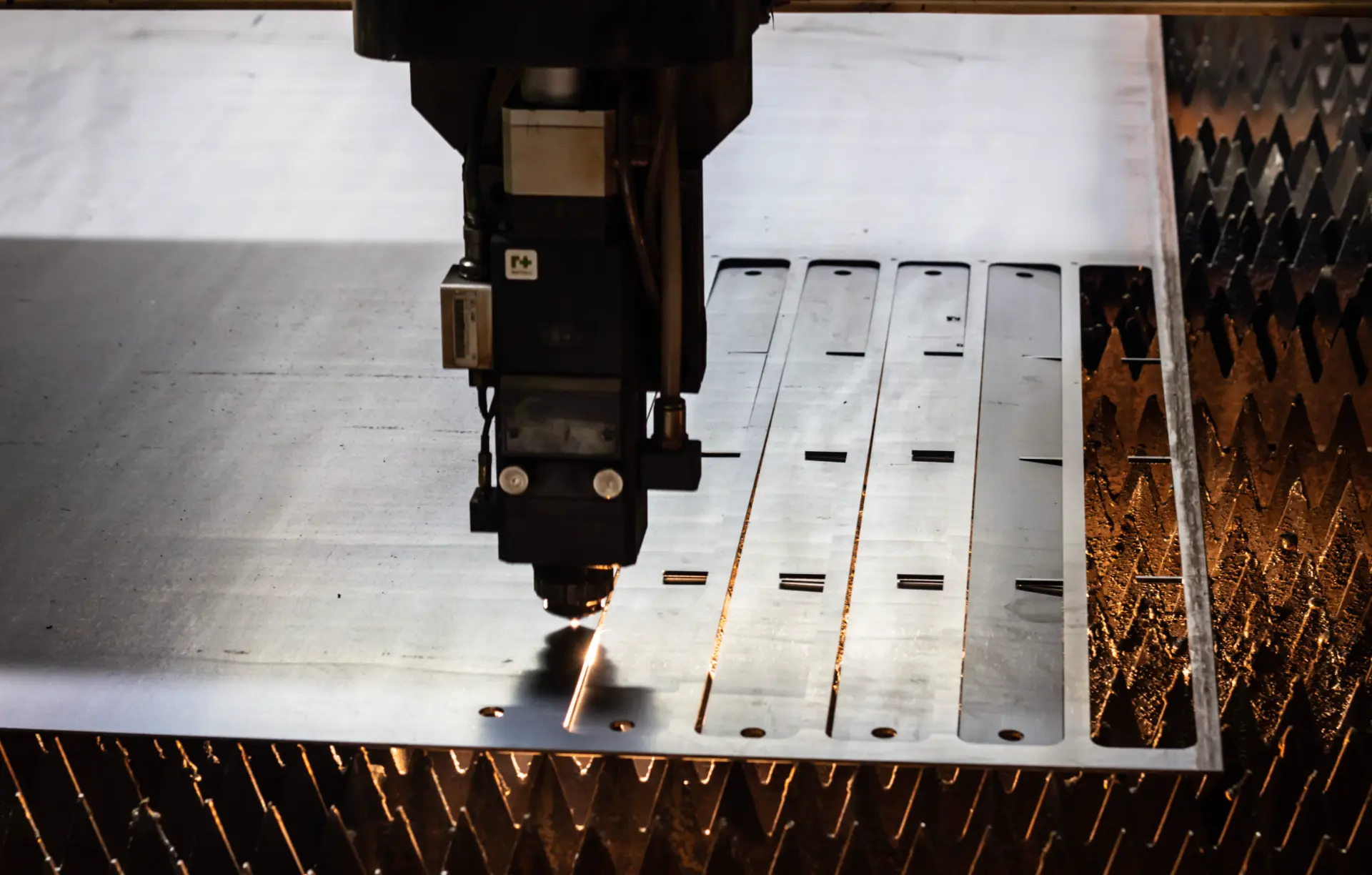
Laser cutting uses a highly focused beam of energy to melt or vaporise material along a programmed path. An assist gas removes molten material from the cut, producing a narrow kerf and an accurately controlled profile. Modern CNC laser systems are particularly effective where components have detailed contours, small features or close dimensional requirements.
- High dimensional accuracy and a narrow kerf
- Detailed internal and external profiles, small holes and intricate geometry
- A relatively small heat affected zone and low distortion
- Smooth edges that may require little secondary finishing
- Efficient nesting of multiple components on a plate
Laser cutting is often preferred when the plate is thin to medium in thickness, the geometry is complex, tight tolerances apply, the appearance of the cut edge matters, or a large number of repeatable components is required. It is not automatically the cheapest option per hour, yet it may deliver a lower total component cost because it reduces rework, grinding, machining and fit up time.
What is plasma cutting?
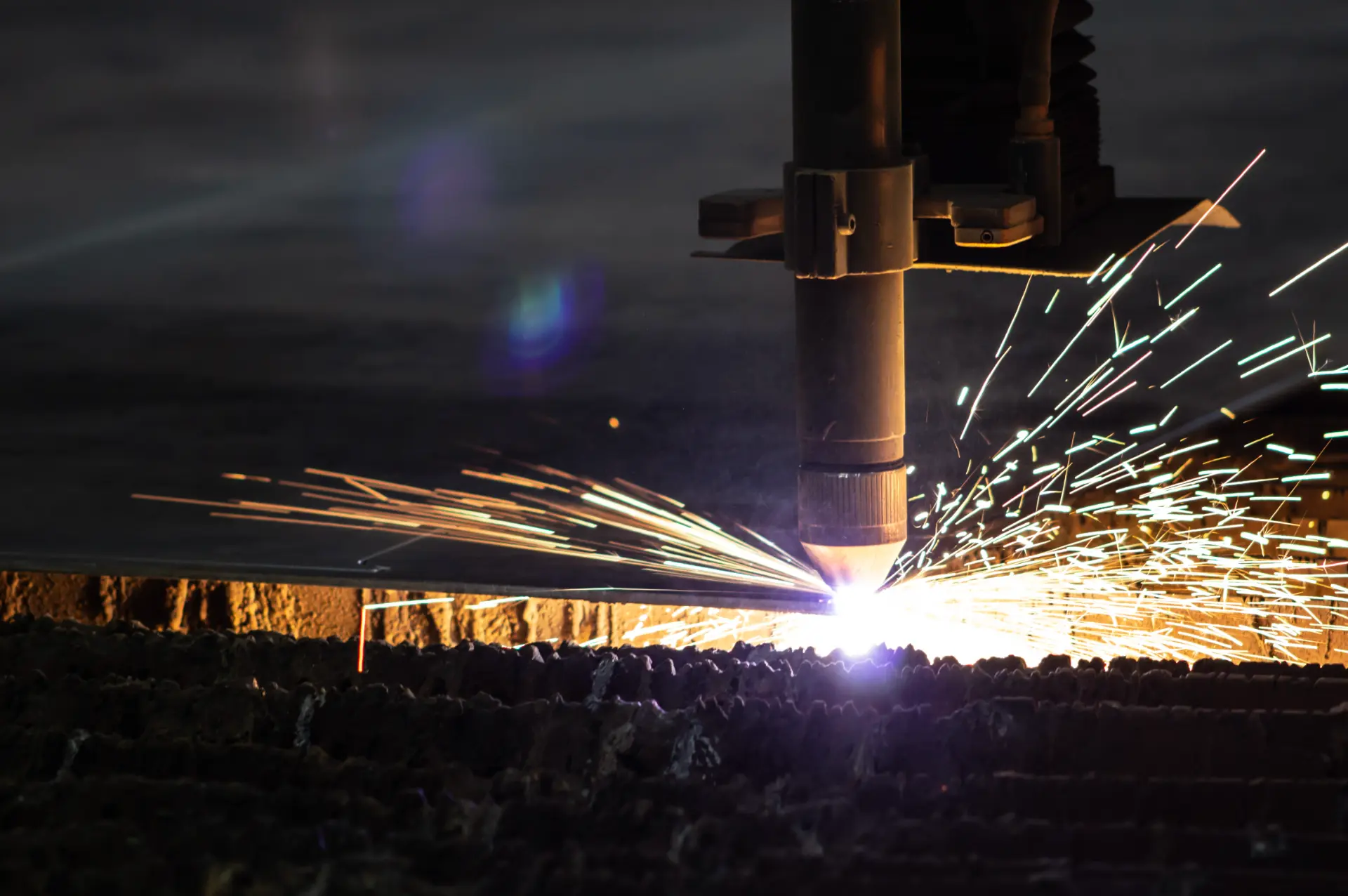
Plasma cutting passes an electric arc through a gas, creating a high temperature plasma jet. The jet melts the metal while high velocity gas removes molten material from the cut. Unlike flame cutting, plasma does not rely on an oxidation reaction, so it can cut electrically conductive metals including mild steel, stainless steel and aluminium. High definition systems provide better arc control, improving accuracy, edge squareness and consistency.
- Fast cutting speeds on medium and thicker plate
- Good accuracy for a wide range of industrial components
- No preheating requirement and faster piercing than flame cutting
- Good productivity on large profiles and production quantities
- A practical balance between quality and processing cost
Plasma suits structural and general engineering components, mining and earthmoving parts, base plates, brackets, gussets, flanges, wear plate and liners. The cut edge may show a slight bevel depending on equipment, consumables, settings and material, so some parts may need grinding, drilling, chamfering or machining before final assembly.
What is flame cutting?
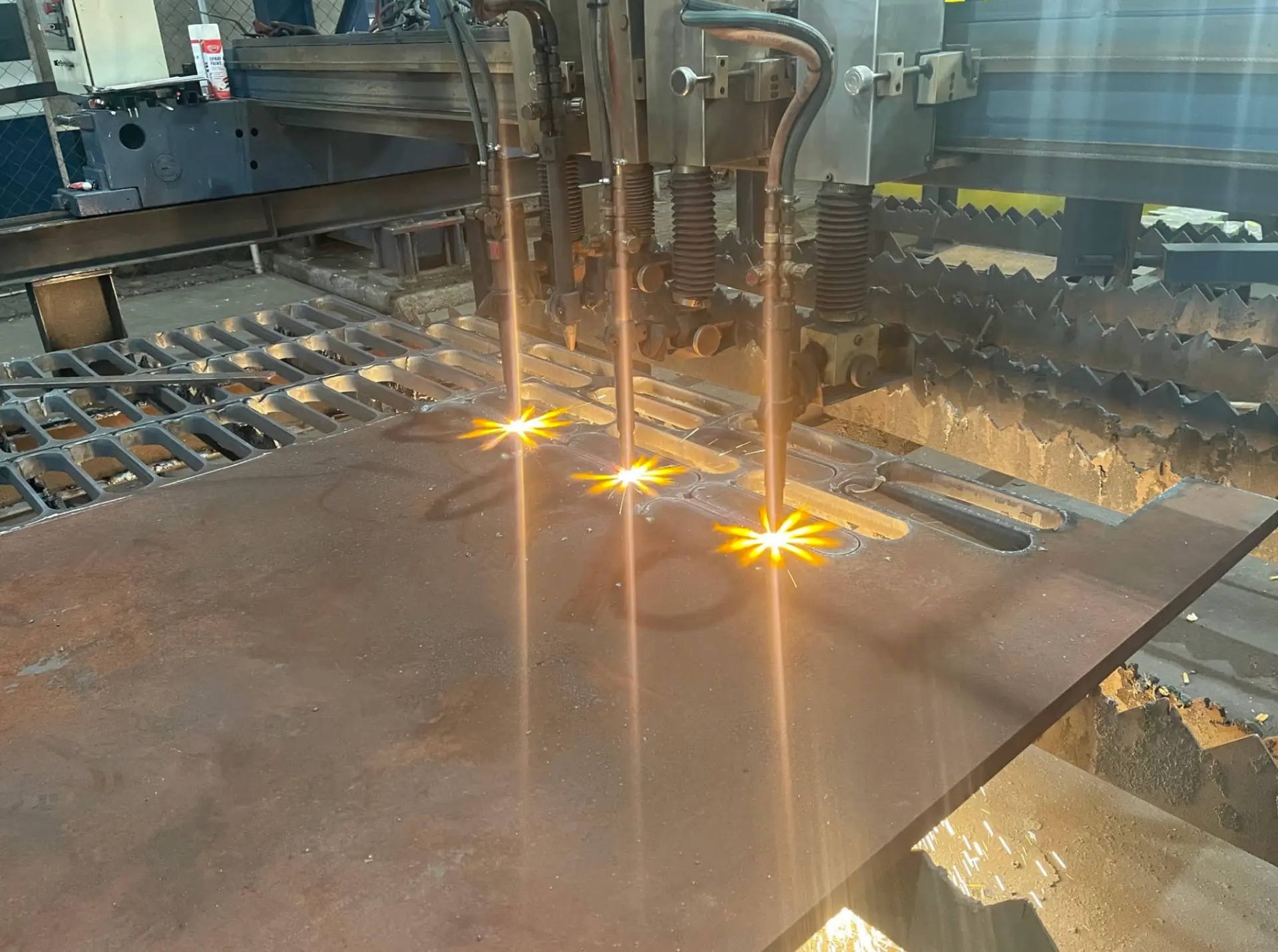
Flame cutting, also known as oxy fuel or oxy acetylene cutting, uses a fuel gas flame to heat the steel to its ignition temperature. A stream of oxygen then reacts with the heated metal, producing iron oxide that is expelled from the cut. Because the process relies on a chemical oxidation reaction, it is used primarily for carbon and suitable low alloy steels, and is generally not appropriate for stainless steel or aluminium.
- Strong capability on thick and very thick carbon steel plate
- Relatively economical processing for suitable thick plate
- The ability to profile large, heavy components
- Straight or bevelled edge preparation where the equipment allows
The main trade offs are higher heat input, a wider heat affected zone, slower cutting and piercing speeds, and a greater likelihood of distortion or secondary edge preparation.
How does plate thickness affect the decision?
Thickness is one of the most important selection factors, but it should not be considered in isolation. Laser becomes particularly attractive on thinner plate and detailed components, plasma is highly productive across medium and thicker plate, and flame cutting becomes increasingly practical as carbon steel thickness increases. ISO 9013, the international standard used to classify thermal cuts, covers overlapping thickness ranges for all three processes, which confirms why thickness alone cannot determine the best method.
Machine power also matters. A high powered modern fibre laser can cut material that older laser systems cannot handle efficiently, while the capacity and quality of plasma and flame cutting systems vary significantly between machines.
Precision, kerf and edge quality
The kerf is the width of material removed during cutting. Laser generally produces the narrowest kerf, followed by plasma and then flame cutting. Edge angularity describes how far the cut edge deviates from perpendicular: laser generally provides the lowest deviation, high definition plasma gives good squareness with some taper, and flame cut edges are less precise with more pronounced drag lines.
The heat affected zone is the area next to the cut where the steel has not melted but may have changed due to heat. Flame cutting introduces the most heat, plasma an intermediate amount and laser the least. This matters most on wear resistant, quenched and tempered or high strength plate, where grade specific recommendations such as controlled preheating, post heating or slow cooling must be followed.
Do not choose on cutting price alone
The lowest cutting price does not always produce the lowest final component cost. A proper comparison should include:
- Quantity of components and nesting efficiency
- Cutting and piercing time, consumables and gas
- Required dimensional tolerance
- Grinding or dross removal, drilling, machining or chamfering
- Weld edge preparation and fit up time during fabrication
- Rejected or reworked components, handling and transport
- The project delivery programme
The right question is not only which process costs less to cut. It is which process gives you the most suitable, project ready component at the best total cost.
Seven questions to ask before selecting a cutting method
- What is the complete steel grade and specification?
- What is the plate thickness?
- What are the component dimensions and quantities?
- Which dimensional and geometric tolerances apply?
- Are there small holes, slots or intricate internal profiles?
- Will the component be bent, rolled, drilled, chamfered, welded or machined?
- Are there grade specific requirements for thermal cutting, preheating or inspection?
Supplying this information, preferably with accurate CAD drawings, helps the processor select the most appropriate cutting method and prepare a more reliable quotation.
Frequently asked questions
Is laser always more accurate than plasma? Laser generally provides greater precision, a narrower kerf and lower edge deviation, yet high definition plasma can provide more than sufficient quality for many structural, mining and general engineering components at a more economical processing cost.
Is plasma better than flame cutting? It depends on the material and thickness. Plasma is generally faster, creates a smaller heat affected zone and cuts a wider range of conductive metals, while flame cutting remains practical and economical for thick carbon and suitable low alloy plate.
Can flame cutting be used on stainless steel? Conventional flame cutting is generally unsuitable because chromium rich oxides interfere with the oxidation process required to sustain the cut. Plasma or laser cutting is typically considered instead.
Which method is cheapest? There is no single cheapest method for every component. Flame cutting can be highly economical for thick carbon steel, plasma frequently offers strong value across medium and thicker plate, and laser may lower total cost when its accuracy reduces downstream work.
The right cutting method starts with the right questions
Laser, plasma and flame cutting are not competing answers to the same requirement. They are different tools suited to different materials, thicknesses, component designs and project priorities. The best result comes from considering the complete requirement, from raw plate and profiling through to bending, rolling, drilling, chamfering, surface preparation and final delivery.
Steel Plate Solutions supplies and processes steel plate for customers across South Africa and sub Saharan Africa. From our Richards Bay and Germiston branches we support mining, engineering, transport, construction, infrastructure, OEM manufacturing, marine and heavy industry requirements. Our capabilities include laser cutting, high definition plasma and CNC profile cutting, supported by estimating, draughting, bending, rolling, drilling, chamfering and other value added services.
Not sure which cutting method is right for your steel plate? Send your steel grade, plate thickness, quantities, drawings and required tolerances and we will help you identify a practical, project ready steel plate solution.