Looking for CNC laser cutting in Richards Bay? Steel Plate Solutions offers fibre laser cutting and steel plate processing for engineering, mining, manufacturing, construction and industrial customers across KwaZulu-Natal.
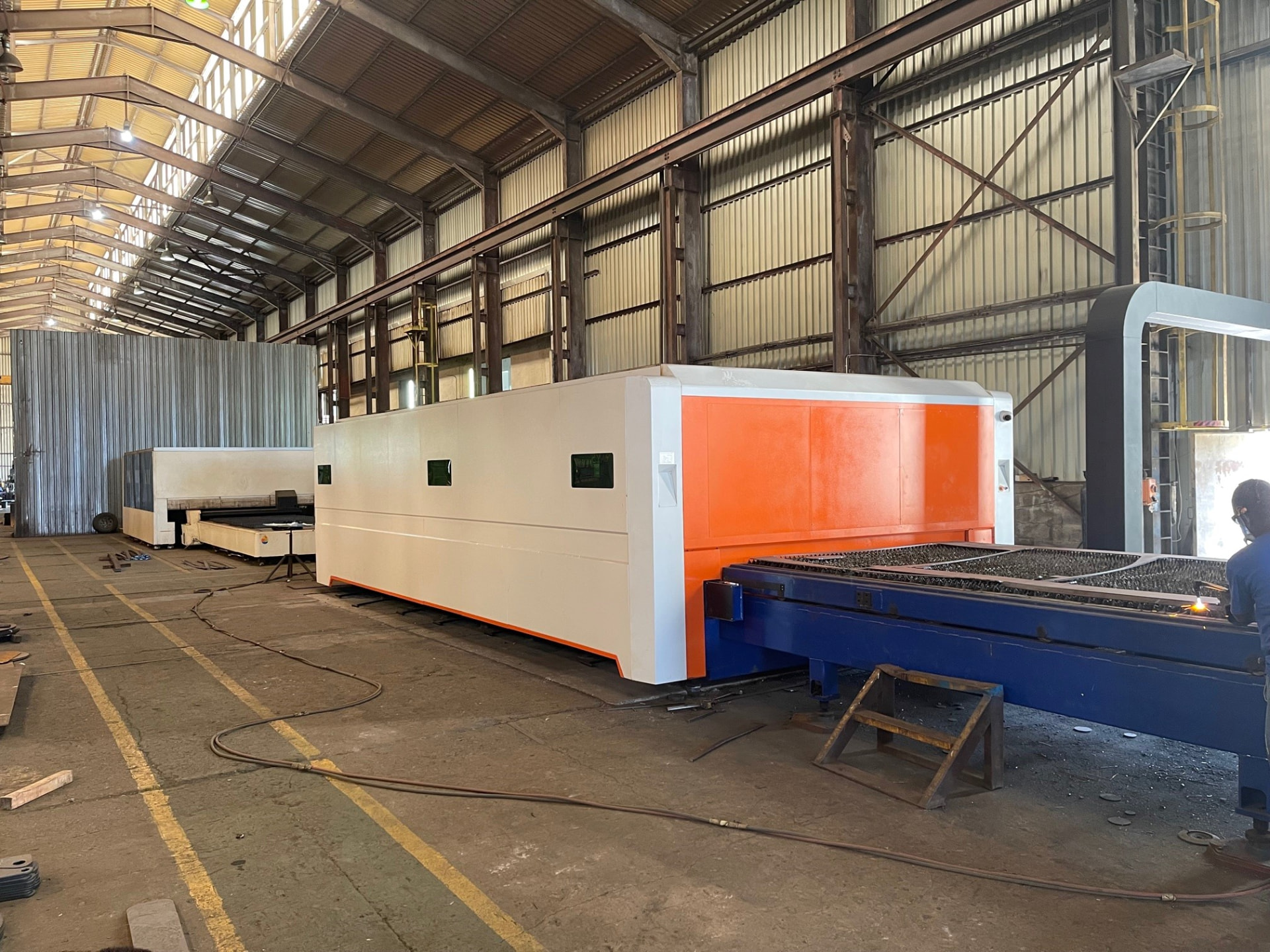
Our Richards Bay branch is equipped with a 12 kW Golden Laser GF2560 fibre laser with a 6 m × 2.5 m cutting bed, supported by a second 4 kW fibre laser with a 4 m × 2 m bed. Alongside cutting, we offer bending, rolling, drilling and chamfering, helping customers take their requirements from plate to processed components.
Whether you need mounting plates, fabrication blanks or repeat parts for equipment manufacturing, choosing the right cutting process starts with understanding what the finished component needs to do.
What is CNC fibre laser cutting?
CNC stands for computer numerical control. It describes how the machine’s movements are controlled. Fibre laser describes the type of laser used to cut the material.
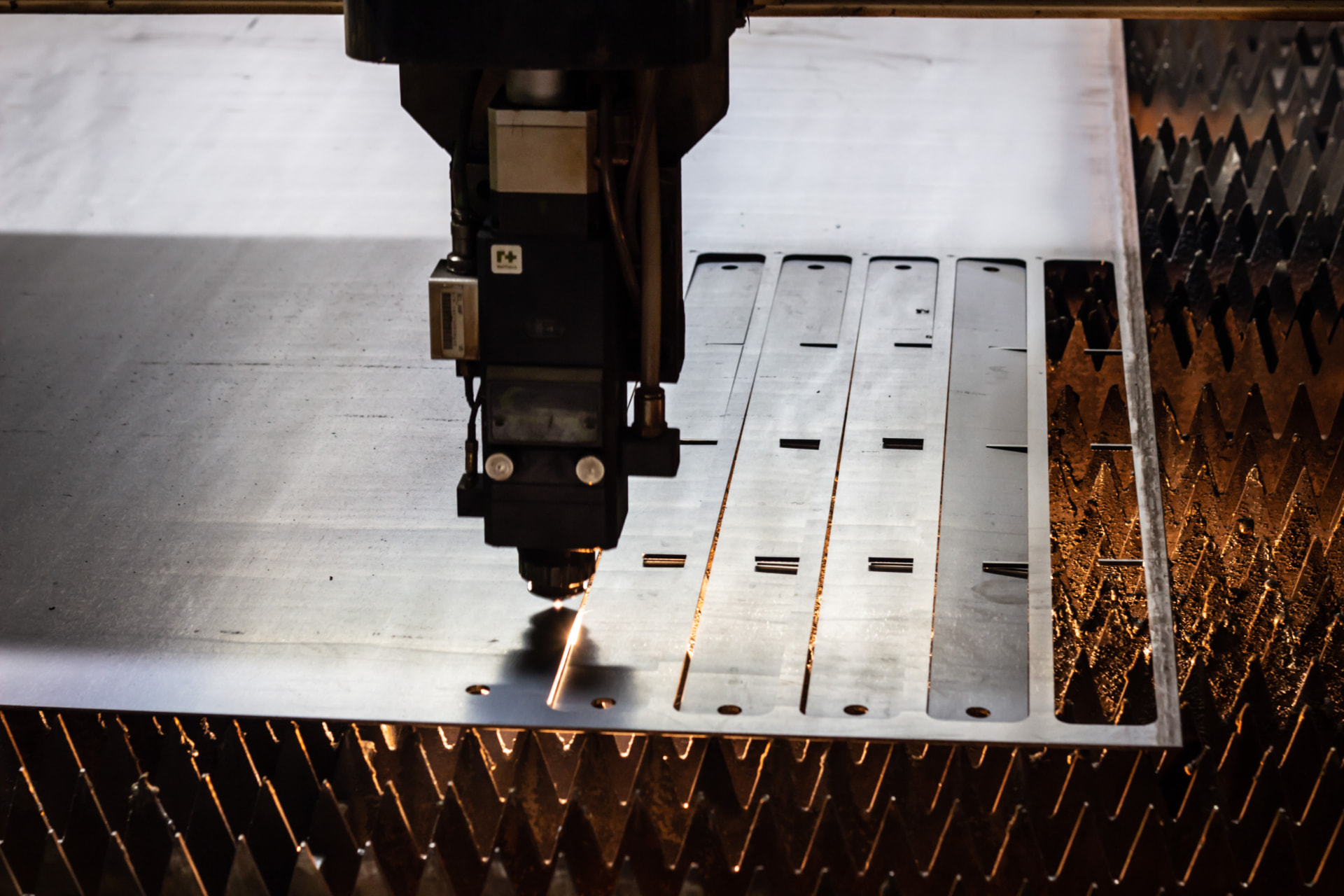
A CNC fibre laser cutting machine follows a programmed path based on a digital drawing. A focused laser beam heats the material at the cutting point, while an assist gas helps remove molten material. The machine follows the required profile to produce the outside shape and internal features such as holes, slots and cutouts.
For engineering and fabrication businesses, this provides a practical way to produce detailed components with consistent geometry across repeat parts.
Fibre laser cutting capabilities at SPS Richards Bay
SPS Richards Bay operates two fibre laser machines, providing flexibility for different plate sizes and component requirements.
| Equipment | Cutting bed |
|---|---|
| 12 kW Golden Laser GF2560 fibre laser | 6 m × 2.5 m cassette type interchangeable cutting bed |
| 4 kW fibre laser in our smaller Bodor machine | 4 m × 2 m cutting bed |
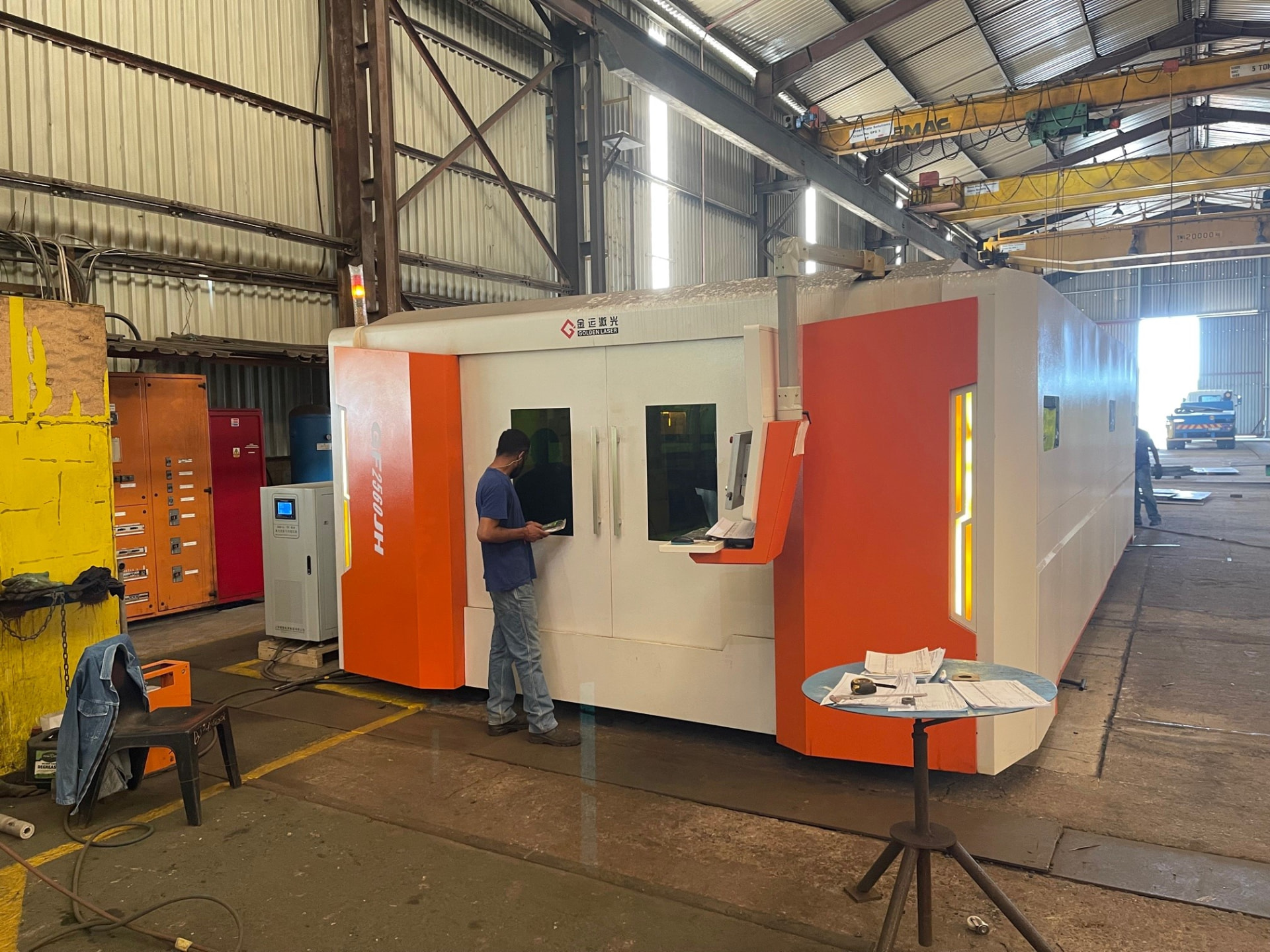
The larger cutting bed accommodates larger plate formats and provides space to arrange multiple components within a cutting layout. This arrangement, known as nesting, helps make effective use of the available material.
Machine power and bed size are only part of the picture. Material grade, thickness, profile detail and the required finish all influence how a component should be processed. Our team assesses these factors when reviewing your enquiry.
What parts can be laser cut?
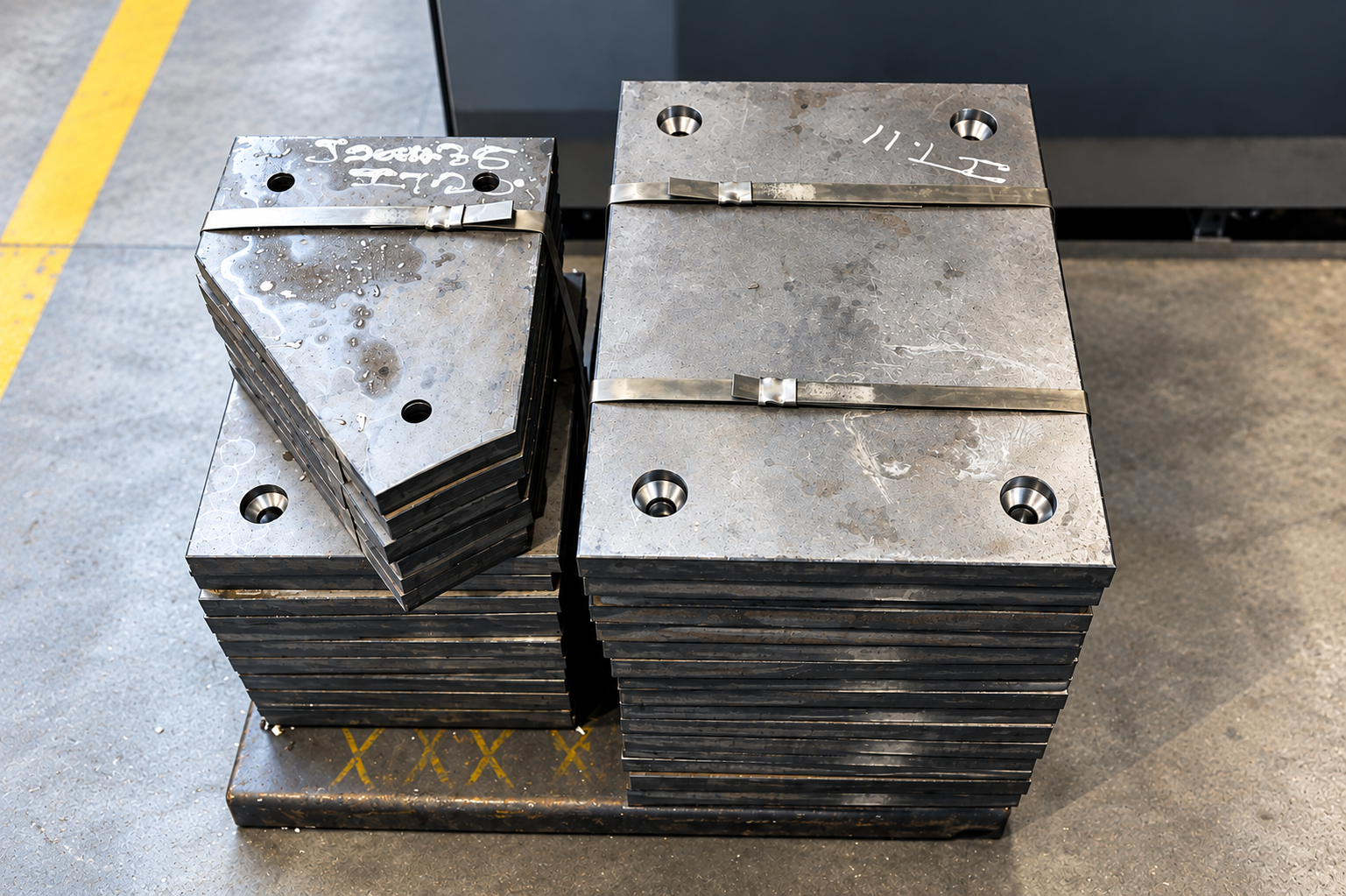
Fibre laser cutting is useful for parts with detailed external shapes or multiple internal features. Typical applications include:
- Mounting plates and brackets for machinery and equipment.
- Gussets and reinforcing plates for fabricated assemblies.
- Base plates with bolt holes and slots.
- Machinery guards and cover plates.
- Fabrication blanks that will be bent or further processed.
- Repeat components for manufacturing and maintenance work.
For example, a mounting plate may require an external profile, four bolt holes and an adjustment slot. Laser cutting can produce these features within the cutting operation, subject to the drawing’s requirements.
Where a hole needs a close fit, a particular finish or a specified thread, additional drilling, reaming, machining or tapping may be necessary. Identifying these requirements upfront helps ensure the correct processing route is selected.
What materials and thicknesses can SPS laser cut?
Our Richards Bay fibre laser capabilities include carbon steel and stainless steel. SPS’s equipment information lists the following upper cutting capabilities, subject to assessment of the material and component requirements:
- Carbon steel: up to 40 mm using oxygen.
- Stainless steel: up to 30 mm using nitrogen.
These figures describe upper capability limits rather than standard production recommendations for every component. SPS does not typically laser cut carbon steel at 40 mm.
The appropriate process depends on material grade, thickness, part geometry, edge quality and production requirements. Plasma cutting may be an alternative for suitable carbon steel or stainless steel components. Conventional flame cutting using oxygen and fuel gas is primarily used for carbon and low alloy steels.
Send your drawing and specifications to our Richards Bay team so we can confirm the right approach for your component.
Why choose CNC laser cutting for steel components?
Consistency across repeat parts
Once the correct drawing and cutting programme are established, CNC control supports repeatable production. This is useful when multiple parts must align within the same assembly or when components are ordered again later. Clearly identifying drawing revisions helps ensure each batch is produced to the correct specification.
Flexibility for detailed profiles
Laser cutting can follow complex contours and produce internal features that would be time consuming to cut manually. This makes it useful for components combining curves, slots, holes and irregular shapes. The smallest practical features depend on material thickness, machine capability and the required quality.
Cutting planned around the finished component
A cut profile is often only the first stage of production. A bracket may need bending. A plate may need chamfering for weld preparation. A critical hole may need further machining. At SPS, laser cutting can be considered alongside our other processing services, allowing the team to assess the complete requirement from the outset.
Laser cutting, plasma cutting or flame cutting?
The best cutting method depends on the job. Laser cutting is often well suited to detailed profiles and components where cut quality and dimensional requirements are important. Plasma and flame cutting also have valuable roles, particularly across heavier plate applications.
When choosing a process, consider:
- Material grade and thickness.
- Overall part dimensions.
- Hole sizes, slots and profile detail.
- Required tolerances and edge finish.
- Further processing.
- Quantity and budget.
Compare steel plate cutting methods
What affects the price of laser cutting?
Laser cutting prices depend on more than the weight of the steel. A simple rectangular plate and a component containing numerous holes and slots can require different amounts of processing, even when their overall dimensions are similar.
| Factor | Why it matters |
|---|---|
| Material grade and thickness | Influence material cost and cutting requirements. |
| Part dimensions | Affect plate selection and cutting layout. |
| Profile complexity | More contours, holes and slots can increase processing time. |
| Quantity | Affects setup, nesting and production planning. |
| Tolerances and finishing | May require additional operations or inspection. |
| Further processing | Bending, drilling and chamfering add to the scope. |
The most useful way to obtain an accurate quotation is to send your drawing, material specification and quantities.
What should you send for a laser cutting quote?
To help us assess your enquiry, please include:
- Your drawing or CAD file, if available.
- Material grade and thickness.
- Quantity required for each component.
- Overall dimensions and critical tolerances.
- Any additional processing, such as bending, drilling or chamfering.
- Required date and collection or delivery requirements.
Clearly mark any features requiring a particular fit or finish, and include the latest drawing revision. If you do not have a drawing ready for production, explain what you need and ask our team what information is required to take the enquiry forward.
A local steel processing partner in KwaZulu-Natal
Working with a supplier involves more than finding a machine capable of cutting your part. Material availability, clear communication, quality checks and the next processing steps all matter.
Based in Alton, SPS Richards Bay combines steel plate supply with fibre laser cutting and additional processing for customers across KwaZulu-Natal. Our services include laser and profile cutting, bending, rolling, drilling and chamfering. Quality checks take place throughout production against customer requirements, helping keep work on track through each processing stage.
Whether your enquiry involves a single component or ongoing project supply, our team can assist with stock, processing options, pricing and lead time.
Frequently asked questions
Is CNC cutting the same as fibre laser cutting?
The terms describe different things. CNC describes how the machine is controlled, while fibre laser describes the cutting technology. A machine can use both, as in CNC fibre laser cutting. Plasma cutters, flame cutters and other machines can also be controlled by CNC.
Does SPS offer fibre laser cutting in Richards Bay?
Yes. SPS Richards Bay operates a 12 kW Golden Laser GF2560 fibre laser with a 6 m × 2.5 m cutting bed and a second 4 kW fibre laser with a 4 m × 2 m bed.
Can SPS laser cut stainless steel?
Yes. Stainless steel is included in the Richards Bay fibre laser capabilities. Send your grade, thickness and drawing so the team can confirm suitability and pricing.
Can parts cut by laser be bent afterwards?
Yes, suitable blanks cut by laser can be bent. SPS Richards Bay offers bending services. Include the finished drawing and bending requirements with your enquiry so material, bend allowances and processing can be assessed together.
How long does laser cutting take?
Lead time depends on material availability, quantities, complexity, further processing and the production schedule. Include your required date when requesting a quote so the team can confirm an achievable timeframe.
Request a CNC laser cutting quote in Richards Bay
Have a drawing, parts list or steel plate requirement? Speak to Steel Plate Solutions about CNC fibre laser cutting in Richards Bay and steel plate processing for your KwaZulu-Natal project.
Visit our Richards Bay branch at 6 Geleiergang, Alton, Richards Bay, 3900.